

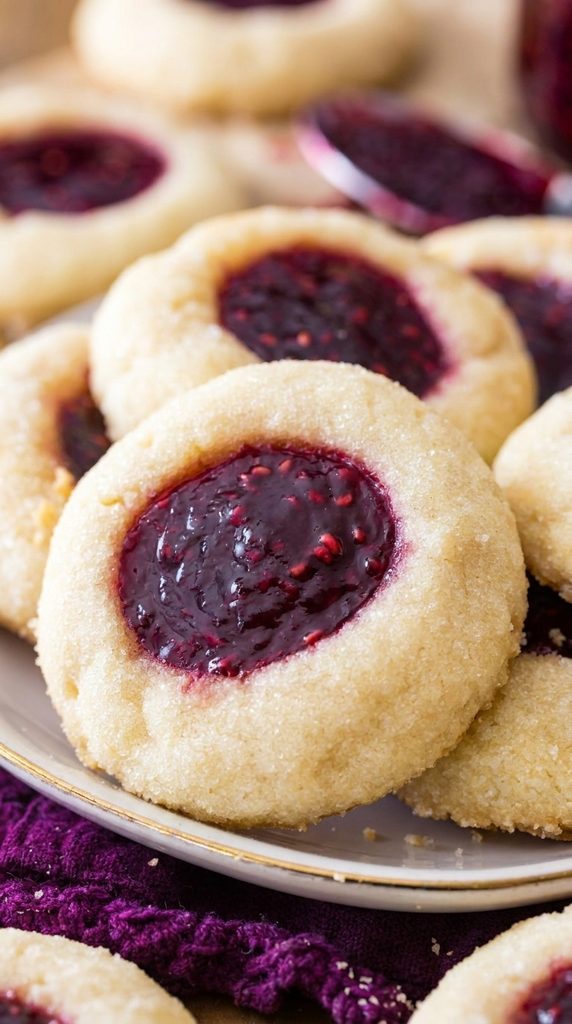
Thumbprint cookies are one of those timeless treats that look far more impressive than they actually are to make. A buttery, slightly crumbly cookie gets a thumb-pressed well in the center, filled with warm, glossy jam, then baked until the edges turn golden. The contrast between the rich cookie and the bright, fruity filling is what makes this recipe a classic.
Quick facts
- Chill time: 30 minutes
- Bake time: 11 minutes
- Oven temperature: 375°F (190°C)
Ingredients
- 1 cup (226 g) unsalted butter, softened to room temperature
- ⅓ cup (70 g) sugar
- ⅓ cup (70 g) light brown sugar, tightly packed
- 1 large egg yolk
- ¾ teaspoon vanilla extract
- 2 ¼ cup (280 g) all purpose flour
- 2 teaspoons cornstarch
- ½ teaspoon salt
- ½ cup sugar, for rolling (optional)
- ⅓ cup (105 g) jam or preserves, flavor of your choice
How to Make Thumbprint Cookies
Part 1: Make the Dough
1. Beat the butter. Place the butter in a stand mixer bowl, or a large bowl if using a hand mixer, and beat until it’s smooth and creamy.
2. Add the sugars. Scrape down the bowl, add both sugars, and beat on gradually increasing speed up to medium-high until everything is well combined, about 30 to 60 seconds.
3. Add the egg yolk and vanilla. Beat these in until fully incorporated.
4. Mix the dry ingredients. In a separate bowl, whisk together the flour, cornstarch, and salt.
5. Combine. With the mixer on low, gradually add the flour mixture to the wet ingredients. The dough will look dry and crumbly at first, so pause occasionally to scrape the bowl. If it gets too thick for the mixer, finish bringing it together with your hands.
Part 2: Shape and Chill
6. Roll the dough. Scoop the dough into 1-tablespoon portions and roll each one well, until it’s smooth and round with no visible cracks or seams. A well-rolled ball is less likely to crack when you press in the thumbprint.
7. Coat in sugar (optional). Roll each ball in granulated sugar if you’d like a sparkly finish.
8. Make the indent. Place the dough balls on a wax paper-covered plate or small cookie sheet. Use your thumb or the rounded back of a teaspoon to press a gentle well into the center of each one.
9. Chill. Transfer the shaped dough to the freezer for 30 minutes. This firms up the butter and helps the cookies hold their shape in the oven.
Part 3: Fill and Bake
10. Warm the jam. While the dough chills, preheat the oven to 375°F (190°C) and place the jam in a small microwave-safe bowl. Heat it briefly, about 5 to 10 seconds, just until it’s no longer firm and stirs easily. It shouldn’t be hot.
11. Fill the cookies. Spoon the warmed jam into each indent, filling it all the way to the top.
12. Bake. Arrange the cookies at least 2 inches apart on a parchment-lined cookie sheet. Bake for 11 minutes, or until the edges just start to turn golden.
13. Cool. Let the cookies cool completely on the baking sheet before eating. The jam center needs time to firm back up.
Why Thumbprints Crack (and How to Prevent It)
Cracking around the indent is the most common issue with this cookie, and it almost always comes down to one of two things. First, any seam or crease left in the dough ball before you shape the thumbprint becomes a weak point that splits open in the oven, which is why rolling the dough into a perfectly smooth ball matters more than it might seem. Second, pressing the indent too deep or too close to the edge thins out the surrounding dough until it can’t hold together as it bakes. A gentle, centered press, stopping well short of the bottom, gives you a clean well without stressing the dough around it.
Choosing and Preparing Your Jam
A thick, high-quality jam or preserve holds up best here. Thin, syrupy jams tend to bubble over and run off the cookie during baking, so if yours looks runny, you can stir in a small amount of extra jam or a tiny pinch of cornstarch to thicken it before filling. Seedless preserves give the cleanest look, but if you don’t mind a more rustic presentation, a jam with fruit pieces adds nice texture. Warming the jam slightly before filling isn’t just for appearance either; it makes the jam easier to spoon neatly into the indent without tearing the dough.
Flavor Variations to Try
- Nutty coating: Roll the dough balls in finely chopped pecans, walnuts, or almonds instead of (or in addition to) sugar for extra crunch and flavor.
- Citrus twist: Add a bit of lemon or orange zest to the dough for a brighter, more fragrant cookie that pairs especially well with apricot or raspberry jam.
- Chocolate centers: Swap the jam for a spoonful of chocolate-hazelnut spread or a piece of chocolate that melts into a pool as the cookie bakes.
- Caramel or dulce de leche: Fill the indent with a small spoonful of thick caramel instead of jam for a richer, more decadent version.
- Mixed fruit tray: Make one batch of dough and fill different cookies with different jams, raspberry, apricot, strawberry, for a colorful variety plate.
Make-Ahead Tips
The dough can be shaped, indented, and frozen on the tray before baking. Once the dough balls are solid, transfer them to a freezer bag or airtight container, where they’ll keep for up to 2 months. When you’re ready to bake, there’s no need to thaw; just add the jam and bake straight from frozen, giving the cookies an extra minute or two in the oven. This makes thumbprint cookies a convenient option to have on hand for last-minute guests or holiday baking marathons, since you can portion the work out over several days instead of doing it all at once.
Storing
Once fully cooled, store the cookies in an airtight container at room temperature for up to 5 days, placing a sheet of parchment or wax paper between layers so the jam centers don’t stick to the cookies above them.
Serving Suggestions
These cookies pair nicely with a cup of tea or coffee, and their small size makes them easy to include on a holiday dessert spread alongside other cookies. Because the flavor and color can change entirely based on the jam you use, they’re also a good choice for matching a theme, red and green jams for the holidays, pastel fruit flavors for a spring gathering, or a single bold flavor like raspberry for a more elegant, uniform tray.
Final Thoughts
Thumbprint cookies earn their place as a classic because they’re genuinely simple to make while still looking like something special. The buttery base, the small technique of rolling and pressing the dough, and the warm jam center all come together for a cookie that’s satisfying in both texture and flavor. Whether you stick with a classic raspberry filling or experiment with something new, this is a recipe worth having in your regular rotation. Let me know how yours turn out.